Mixing frame styles without it looking chaotic
If you've got more than one piece to hang, you've probably wondered whether every frame needs to match. It doesn't, and honestly, a wall of identical frames can end up feeling a little flat, like it was bought as a set rather than collected over time. The trick isn't avoiding variety, it's mixing with intention.
Why Matching Everything Isn't the Goal
There's a common assumption that a "proper" gallery wall means picking one frame style and sticking to it religiously. In reality, some of the most interesting walls we see come from a mix, different timbers, different widths, the occasional metal frame sitting alongside something more traditional. What separates a considered mix from a cluttered one usually isn't the variety itself, it's whether there's some kind of thread tying it all together. That thread can be subtle, but it needs to be there.
Pick One Thing to Keep Consistent
The easiest way to mix frame styles without it looking accidental is to hold one element steady while you play with the rest. That could be:
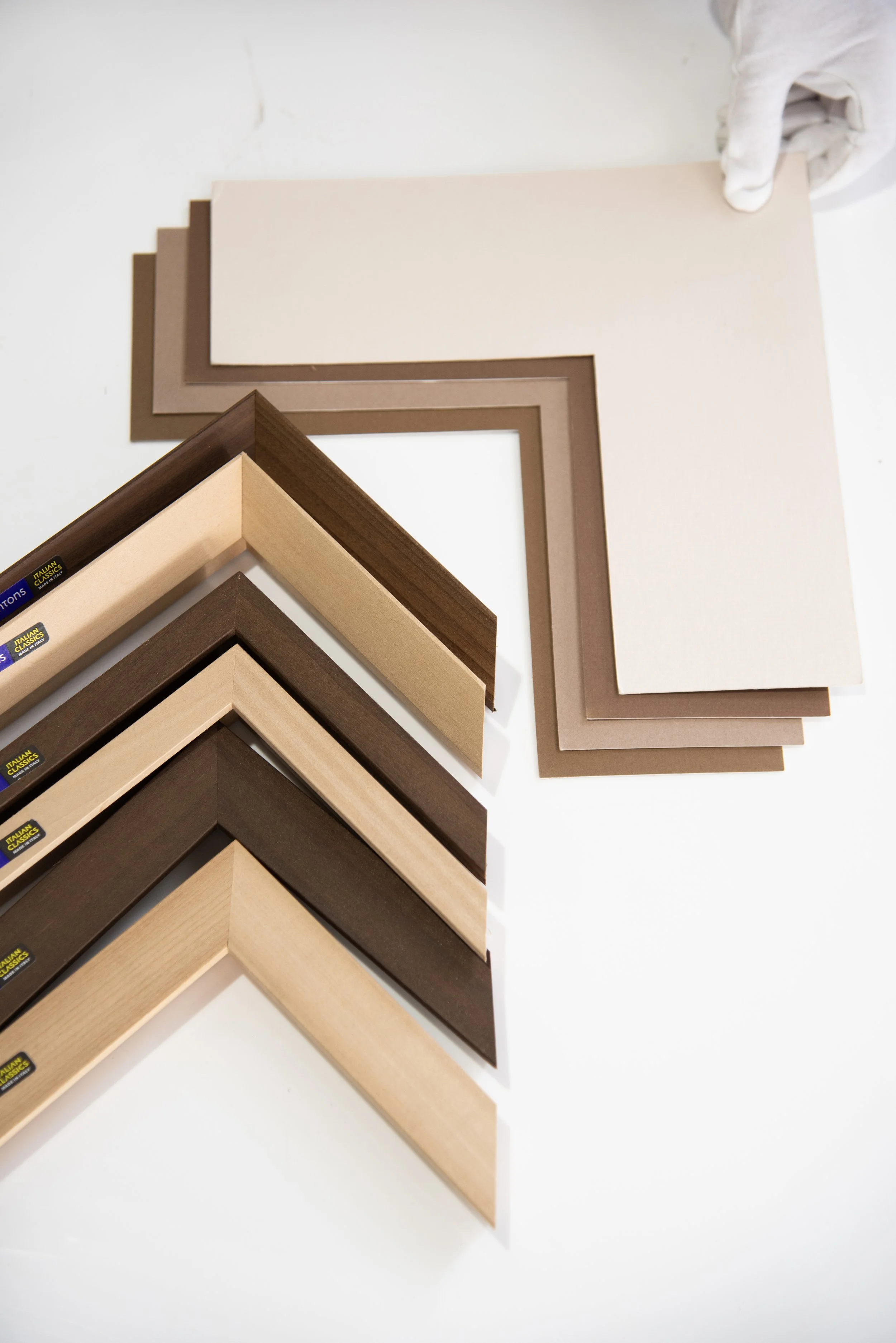
Colour — timber frames in different shapes and widths, but all in the same warm tone
Finish — a mix of matte black and brushed metal, but nothing glossy or overly ornate breaking the mood
Matboard — different frame styles, but every piece mounted with the same colour matting to tie them together
Width — frames of different colours or materials, but all roughly the same thickness, so the eye reads them as a set even when the details differ
Once one thing is consistent, everything else has room to vary without the wall feeling disorganised. It's a bit like getting dressed, you can mix patterns and textures freely as long as one element, a colour palette or a common thread, holds the outfit together.
Let the Pieces Lead
Not every piece calls for the same treatment. A delicate botanical print might suit a slim, understated frame, while a bold photograph or a piece of memorabilia can carry something heavier and more textured. Mixing styles often works best when the frame matches the personality of what's inside it, rather than forcing everything into a uniform look.
This is especially true when you're framing a genuine mix of items, a signed jersey, a few family photos, and a piece of fine art, say. Trying to put all three in identical frames rarely does any of them justice. Letting each piece dictate its own frame, while still tying them together through colour or spacing, usually reads as far more considered.
Group by Theme, Not Just Frame
If you're building out a gallery wall, grouping pieces by subject or colour palette gives the eye something to follow, even when the frames themselves are quite different. A cluster of black and white photography can happily sit next to a colourful print if the frames share a similar scale and spacing. Leaving consistent gaps between pieces, rather than crowding them together, also does a lot of quiet work in making a mixed wall feel deliberate rather than haphazard.
“You can mix patterns and textures freely as long as one element, a colour palette or a common thread, holds the outfit together.”
A Few Combinations That Tend to Work
If you're not sure where to start, these pairings are a reliable starting point:
A slim black metal frame alongside a wider black timber frame, same colour family, different textures
Natural oak paired with a warm walnut, two timbers close enough in tone to feel related
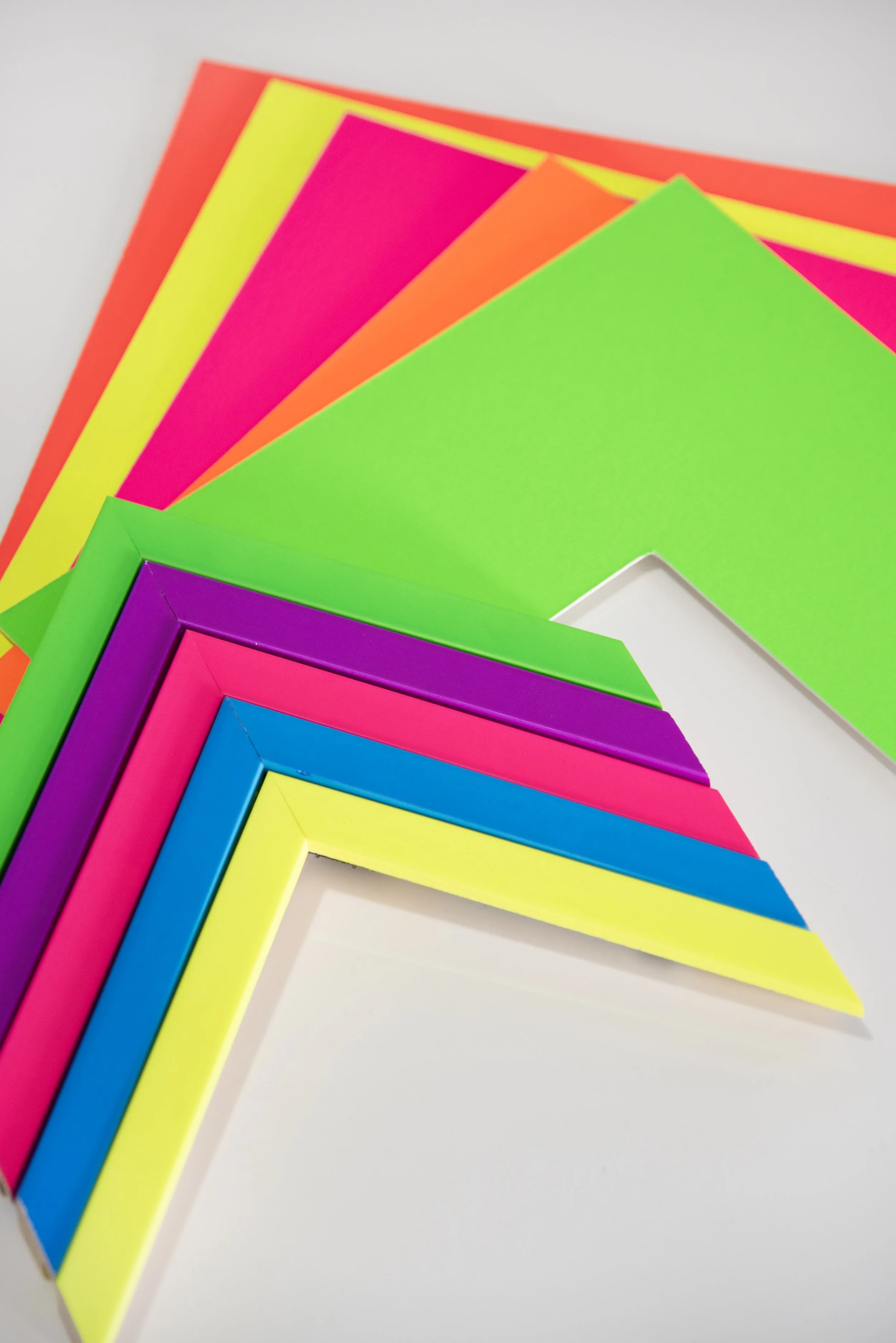
One statement frame (bold colour, unusual width) surrounded by a few simpler, neutral frames that let it stand out without competing
Common Mistakes to Avoid
A few things tend to tip a mixed wall from "considered" into "chaotic":
Too many finishes at once, gloss, matte, metallic and timber all in the same grouping rarely settles
Wildly inconsistent sizing with no visual anchor to tie the arrangement together
Matboard colours that clash rather than complement, this is often the detail people forget to think about
When in Doubt, Bring It In
Photos on a screen rarely tell you how frames will actually look together in person, especially once you factor in matboard colour, timber tone, and the light in your own home. If you're planning a wall with a few different pieces, it's often easier to bring them in and talk it through with us. We're always happy to help you find a combination that feels considered rather than chaotic.
Have a few pieces you're not sure how to bring together? Visit us in-studio or get in touch and we'll help you work out a combination that suits your space.